What’s Blooming in December?
As we enter the heart of winter, the environment might seem barren but if you look closer you will see December is still blooming with life. From resilient shrubs to blooming coastal wildflowers, Destin-Fort Walton Beach is an environment of discovery this season. Check below to see what’s blooming in December.
Woody Goldenrod (Chrysoma pauciflosculosa)

Woody goldenrod is an evergreen shrub that is native to the sunflower family. Woody goldenrod is not a true goldenrod species despite its tall yellow flowers. Instead, this is a sole member of the genus Chrysoma due to its distinct woody multibranched growth. This perennial shrub is only found in the western half of the Northwest Florida, and in parts of Mississippi to North Carolina preferring xeric uplands and sandhill ecosystems. Woody goldenrod prefers well-drained, sandy soil and is tolerant to salt spray. This shrub has adapted a wooly texture on the underside of its leaves to prevent water loss. This species can be seen blooming in March all the way through December growing up to 3 feet in height.
You can see Woody Goldenrod blooming in the dunes on the beach, spoil islands, or up on the trails in Crestview.
White Beggarticks (Bidens alba)
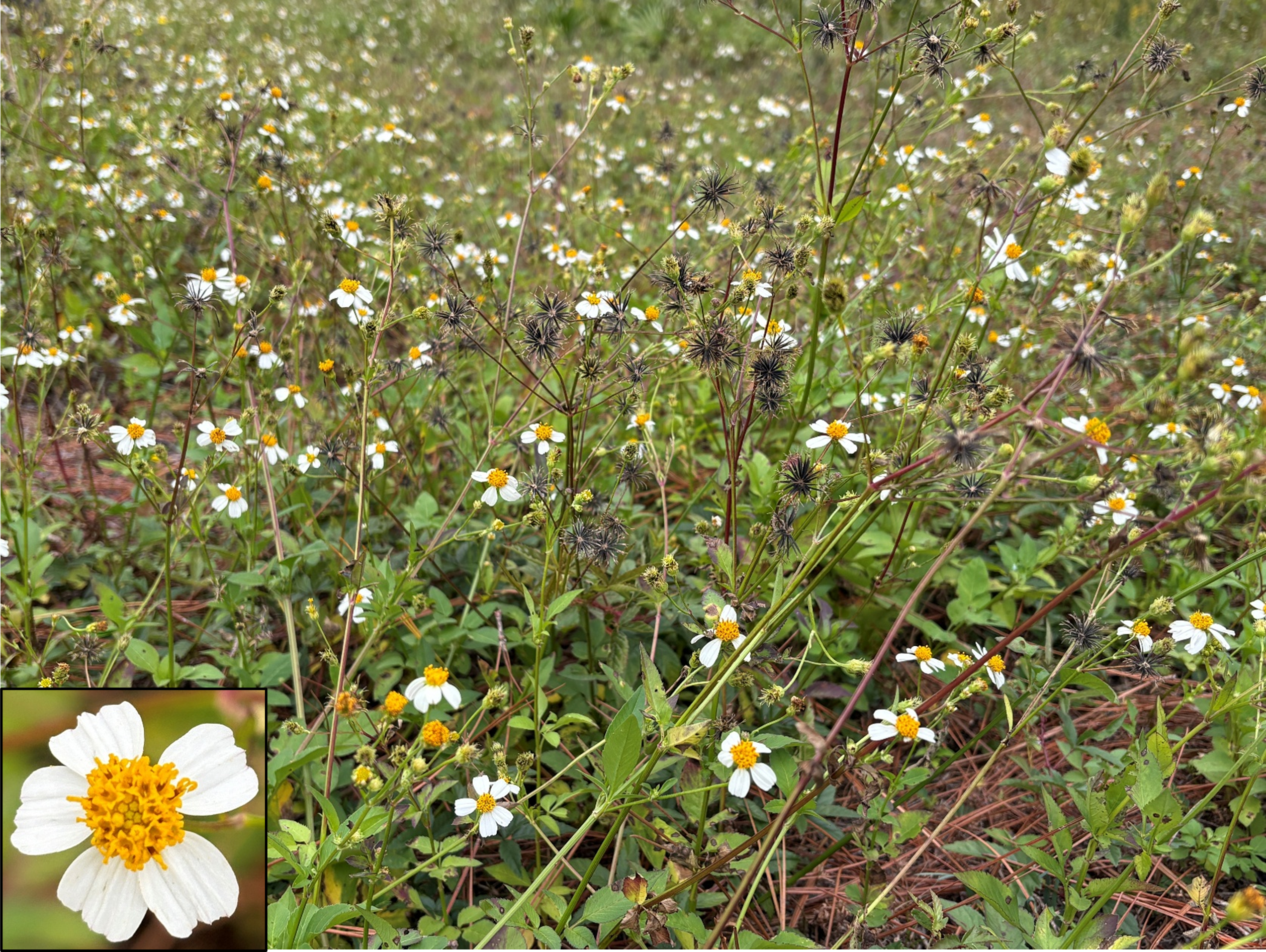
Commonly referred to as Spanish needle, white beggartick is an annual forb in the daisy family. This wildflower is one of Florida’s most controversial flowers for its weedy aggression in gardens and questionable native status. Many botanists do not consider Beggarticks to be native to Florida due to its first presence in the 1800s, genetically it is more closely related to a Mexican species, it is most commonly found in disturbed areas, and lastly it is not considered a natural component of any Florida plant communities. While this is a controversial topic white beggarticks do provide blooms year-round and attract many pollinators such as bees and butterflies. White beggarticks can grow up to 8 feet tall and the seeds of this forb are shaped like a harpoon to cling onto fur or clothing giving this species the nick name “beggar-ticks.”
You can see White Beggarticks blooming on the spoil islands, or up on the trails in Crestview and in Rocky Bayou State Park.
Camphorweed (Heterotheca subaxillaris)
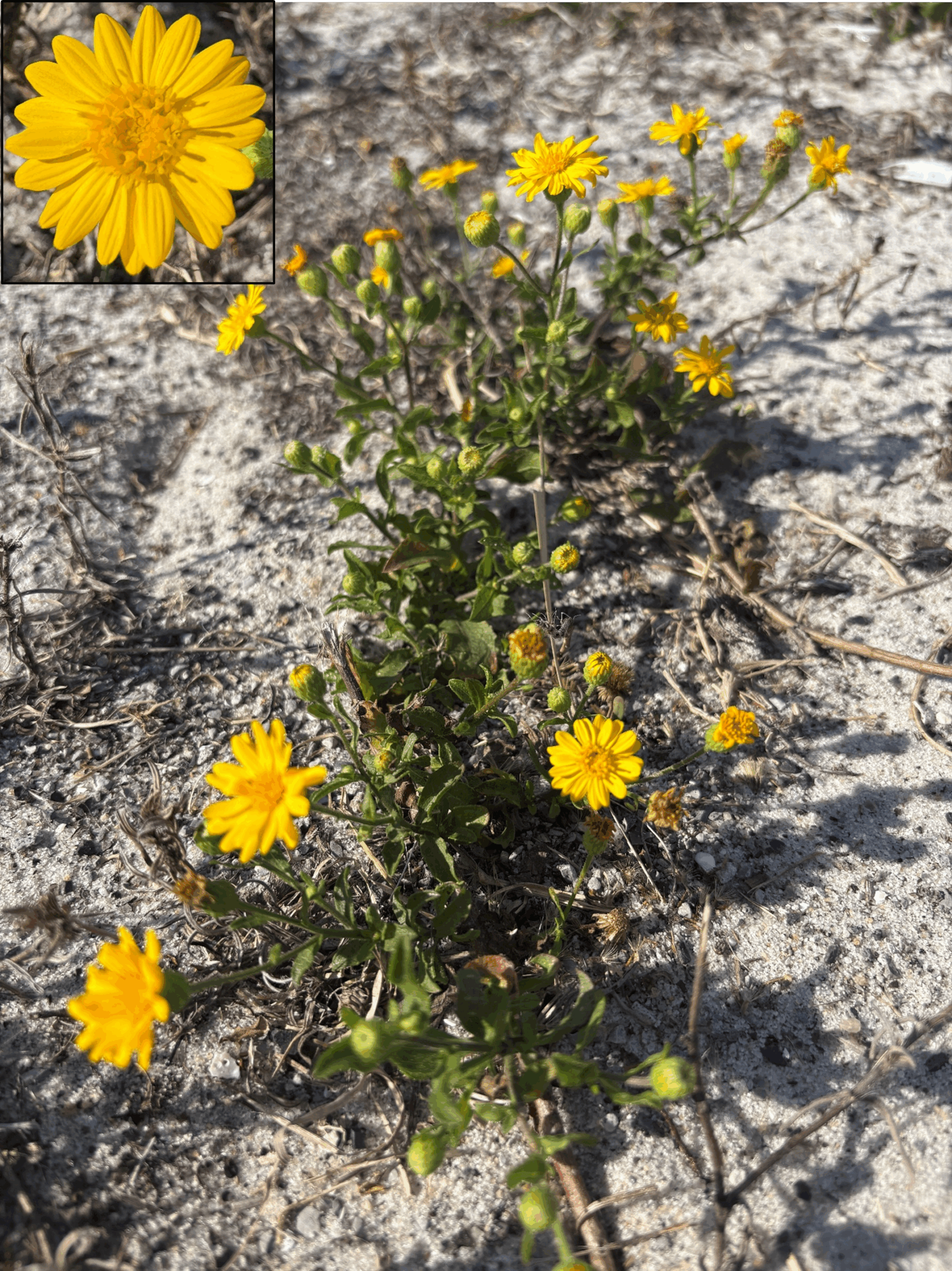
Camphorweed is an annual to biennial herbaceous shrub that receives its name due to its camphor odor when the leaves are crushed. The shrub blooms bright yellow ray florets and disk florets. Leaves and stems are covered in small hairs that are sticky when touched. Typically, camphorweed blooms in the summer and fall, but if conditions are right, it may bloom year-round. This shrub can grow over 3 feet tall in coastal dunes, grasslands, scrub habitat, and pinelands.
You can see Camphorweed blooming on some of the trails in Crestview, in the dunes, and in John Beasley Park.
Spurge Nettle (Cnidoscolus stimulosus)
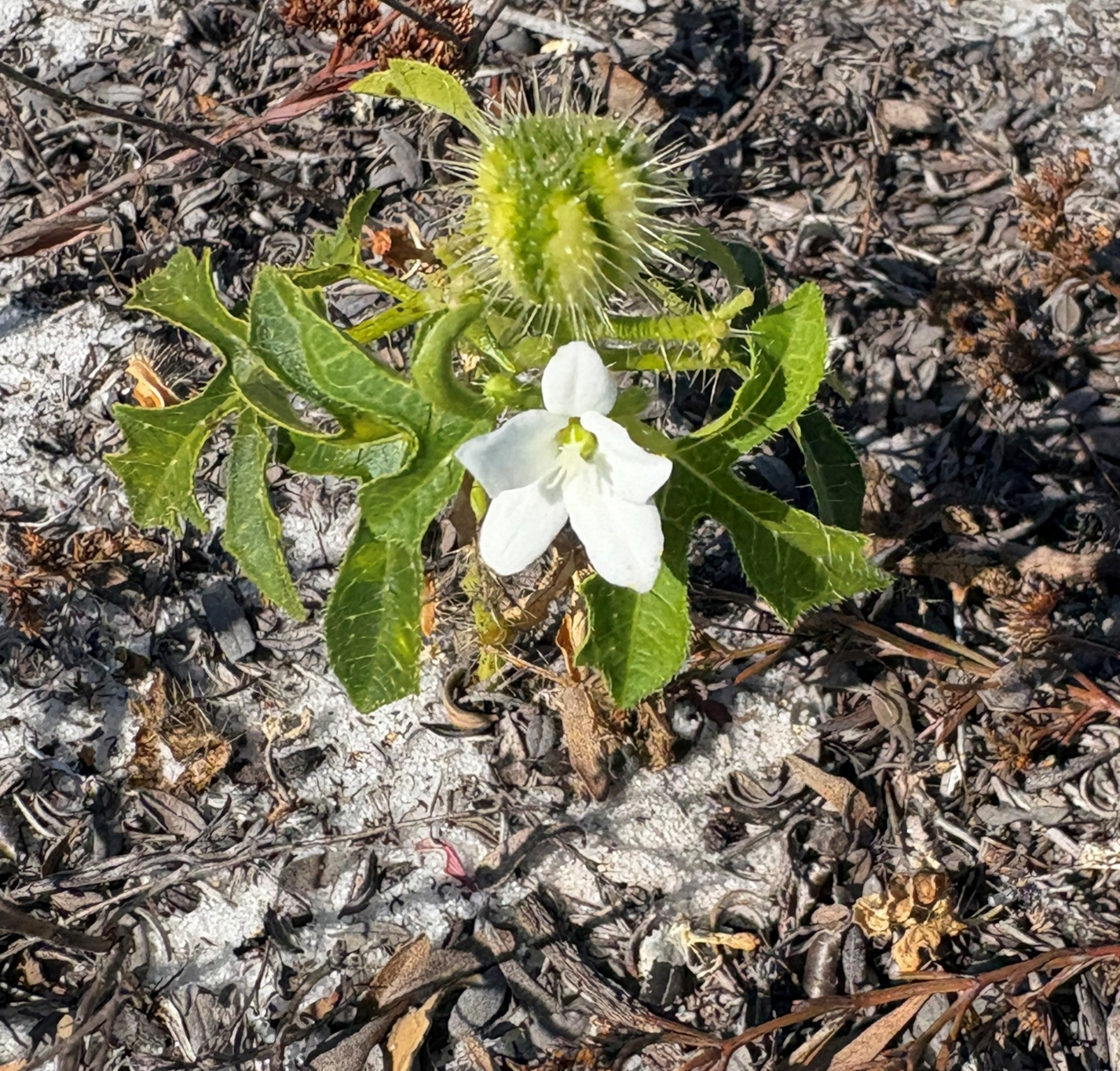
Also known as tread-softly and finger rot, this herbaceous perennial plant produces white trumpet-shaped flowers that are also covered in small stinging hairs. The stinging hairs cover the stem, leaves, and seeds of this plant. If the hairs are touched a stinging sensation will cause irritation and can even cause rashes in some people. Spurge nettle is not a true nettle despite the plants stinging capabilities. This plant prefers well-drained, sandy soil with light shade and is known to bloom year-round. It naturally occurs in sandhills, scrubs, pine, and flatwoods habitats. It attracts butterflies and other pollinators. This is even a treat of the elusive beach mouse. Despite the stinging characteristics of this plant, beach mice will break open the seed pods on this flower to consume, and this helps disperse the seeds throughout the ecosystem.
You can see Spurge Nettle blooming in the dunes on the beach and at John Beasley Park.
Events in Destin-Fort Walton Beach
It’s always the best time of the year to visit Destin-Fort Walton Beach, Florida. Mild temperatures and warm gulf waters make the area enjoyable no matter the season. And with a running lineup of exciting local events and festivals, there’s always something to do in Destin-Fort Walton Beach!

April 11, 2026 - April 12, 2026
Athletic Championships 2026
Athletic Championships National Competitions are 2-day events with prestigious titles,…
See details
April 11, 2026 - April 12, 2026
Northwest Florida 2026 Spring Home Show
FREE ADMISSION TO ALL VISITORS
OVER…
See details
September 4, 2025 - April 18, 2026
2025-2026 Mattie Kelly Arts Season
Welcome to Mattie Kelly Arts Center, located along the beautiful Emerald…
See details