What’s Blooming in January?
Winter in Destin–Fort Walton Beach brings subtle shifts, but the landscape remains rich with evergreen life. January highlights the region’s iconic pines, each offering unique textures, needles, and pine cones that tell the story of our coastal forests. Check below to explore what’s blooming in January.
The genus Pinus are evergreen conifers known for needle-like bundles and cones thriving in harsh conditions and sandy soils. They provide valuable timber, resin, edible pine nuts, and support native and imperiled wildlife. There are about 100 species of pine trees, and most are found in the Northern Hemisphere. Pine trees are known to live on average for 100 years in favorable conditions.
Longleaf Pine (Pinus palustris)
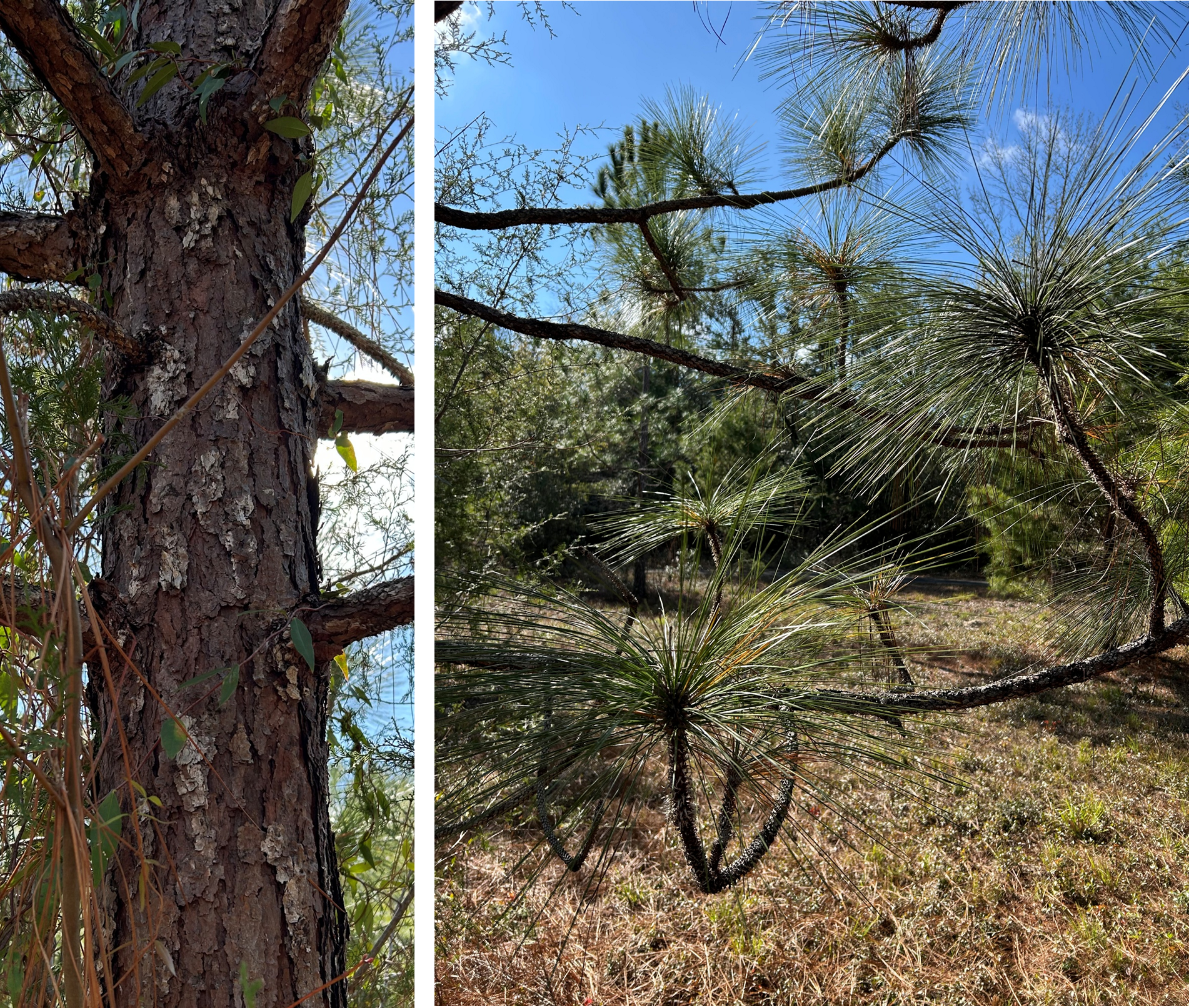
Longleaf pine is native to the southeastern U.S. coastal plain from Texas to Virginia into central Florida. Longleaf pine is a highly fire-tolerant pine due to its thick bark and a protected bud in its grass stage. This pine takes a long time to grow with its grass stage averaging 1-7 years, the bottlebrush stage at 1-2 years, then the sapling stage is where the tree gains height at about 3 feet per year. Lastly, the longleaf pine reaches maturity at about 80-100 feet tall where the pine will produce cones and this occurs after 100-150 years. The longleaf pine ecosystem provides an essential habitat for many imperiled species such as gopher tortoises, pine snakes, indigo snakes, flatwood salamanders, gopher frogs, and the red-cockaded woodpecker.
Identification
• Needles: long needles (up to 18 inches), flexible, grow in bundles of typically 3, dark green
• Bark: thick, reddish-brown, and scaly
• Cones: large and spiny, 6-9 inches long, have a sharp spine in the middle of each scale
• Height: grows 80-100 feet tall
You can see Longleaf Pine growing up on the trails in Crestview.
Slash Pine (Pinus elliottii)
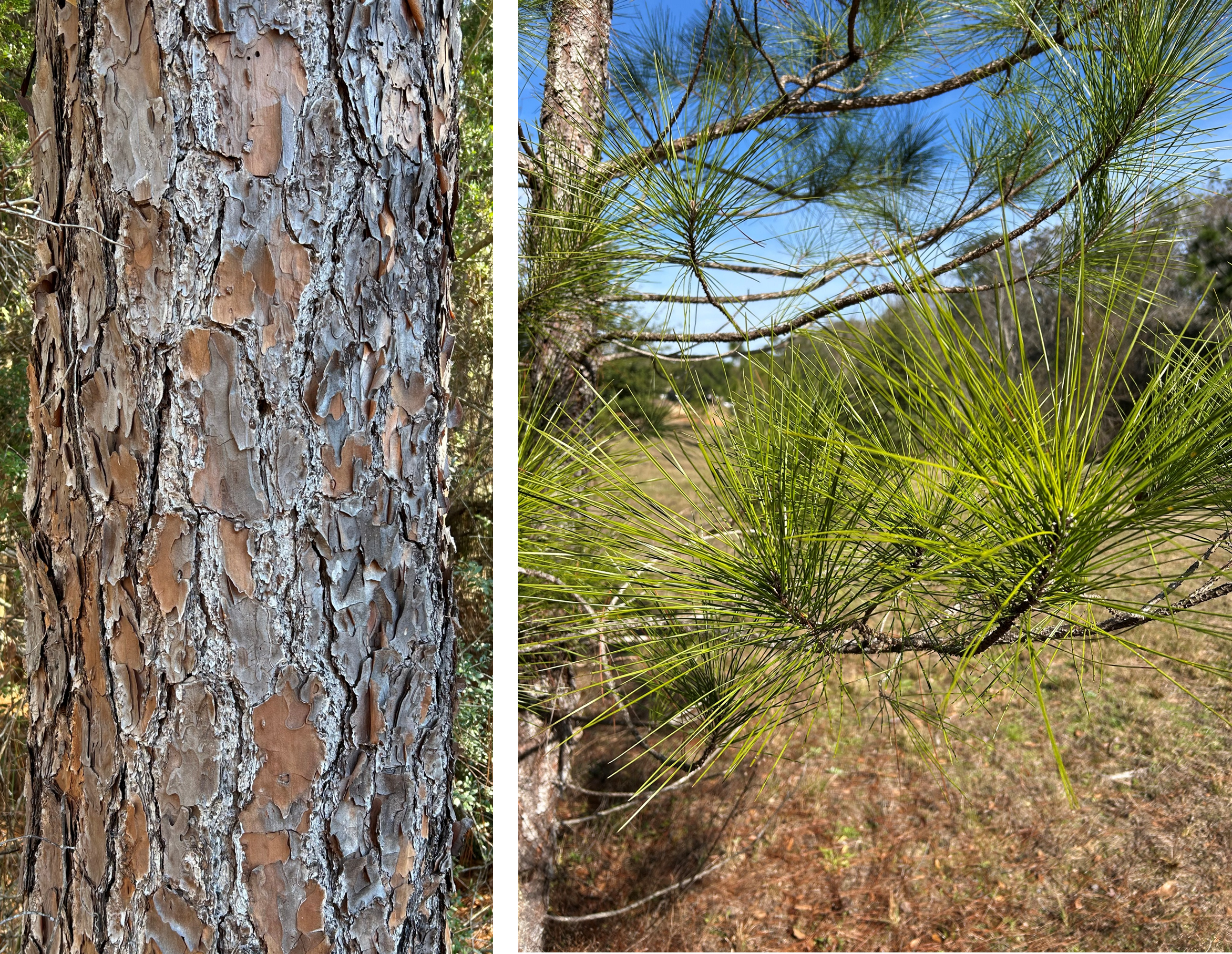
Slash pine, also known as the southern Florida pine, is native to the coastal plains from South Carolina to central Florida and west to Louisiana. Slash pine is a fast-growing, fire-tolerant southern yellow pine known for its fragrant long needles. Slash pine is used in timber and pulpwood thriving in well-drained soils in the southern U.S. This pine reaches maturity at 10-15 years old reaching heights of 75-100 feet tall and can live approximately 200 years old. Slash pine is crucial to the ecosystem because it provides refuge for wildlife and helps to prevent erosion.
Identification
• Needles: 7-12 inches long, bundles of 2-3 per fascicle
• Bark: young trees have rough grayish-brown bark, as they mature the bark is thick, flaky with an orangey-brown color underneath
• Cones: 3-7 inches long, reddish-brown, small prickly spine on the tip of each scale
• Height: grows 60-100 feet tall, fast-growing
You can see Slash Pine growing up on the trails in Crestview.
Loblolly Pine (Pinus taeda)
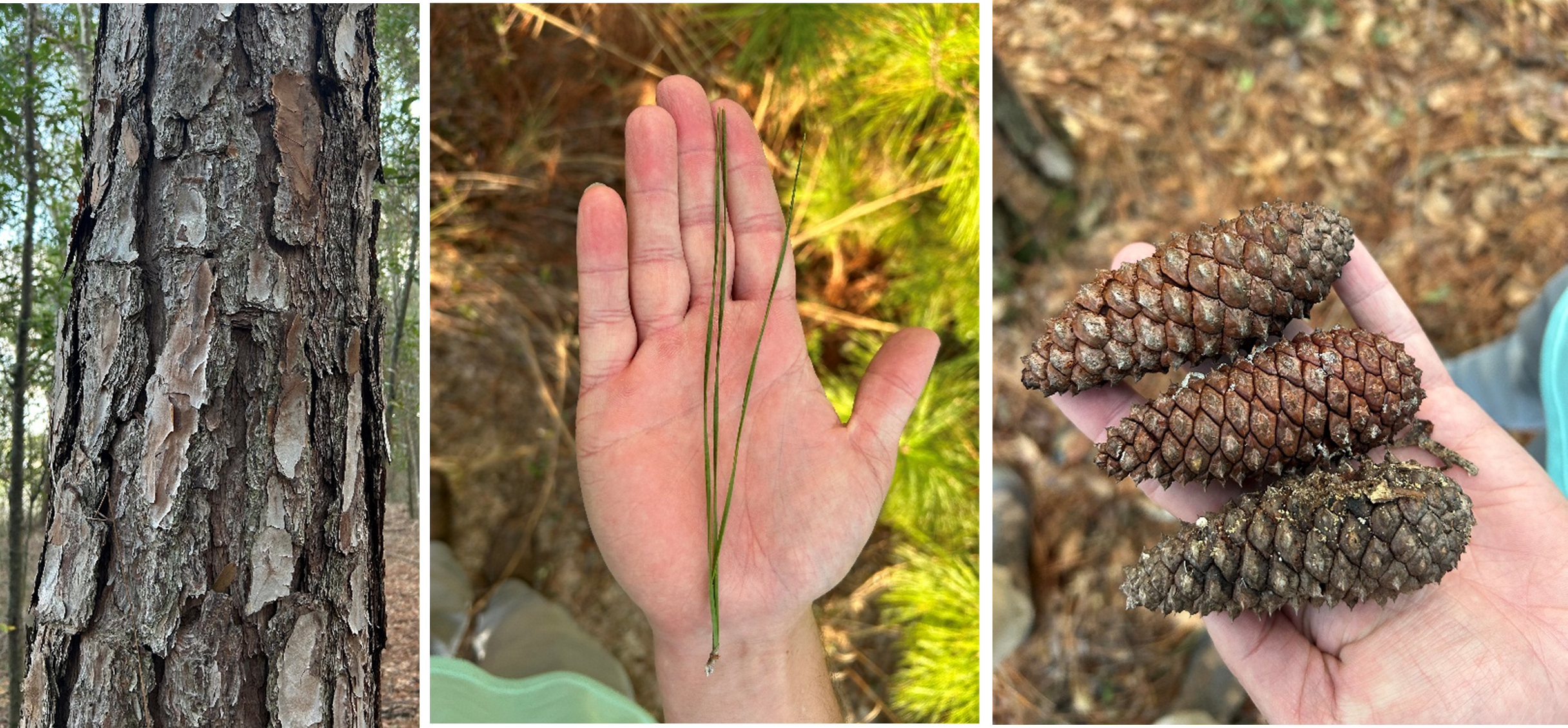
Loblolly pine is native to the southeastern U.S. with a range extending from southern New Jersey south to central Florida and west to eastern Texas. Loblolly is a southern term for low-lying wet area or puddles which is the habitat these trees reside in. Loblolly pine is known for their reddish-brown bark and long needles and is often referred to as “Oldfield Pine” and “Rosemary Pine.” Loblolly is one of the fastest-growing pine species growing over 24 inches in height per year! This pine reaches maturity at 90-115 feet tall with some individuals reaching up to 169 feet tall! Once loblolly pine reaches maturity it is somewhat fire tolerant. They can live up to 200 years or more and are the most commercially valuable pine in the region.
Identification
• Needles: 6-9 inches long, dark green or yellowish-green, bundles of 3
• Bark: young trees have rough grayish-brown bark, as they mature the bark is thick, dark reddish-brown with deep furrows
• Cones: oval-shaped, reddish-brown, 3-6 inches long, stout, sharp prickles on the scales
• Height: grows 90-110 feet tall
You can see Loblolly Pine growing up on the trails in Crestview.
Sand Pine (Pinus clausa)
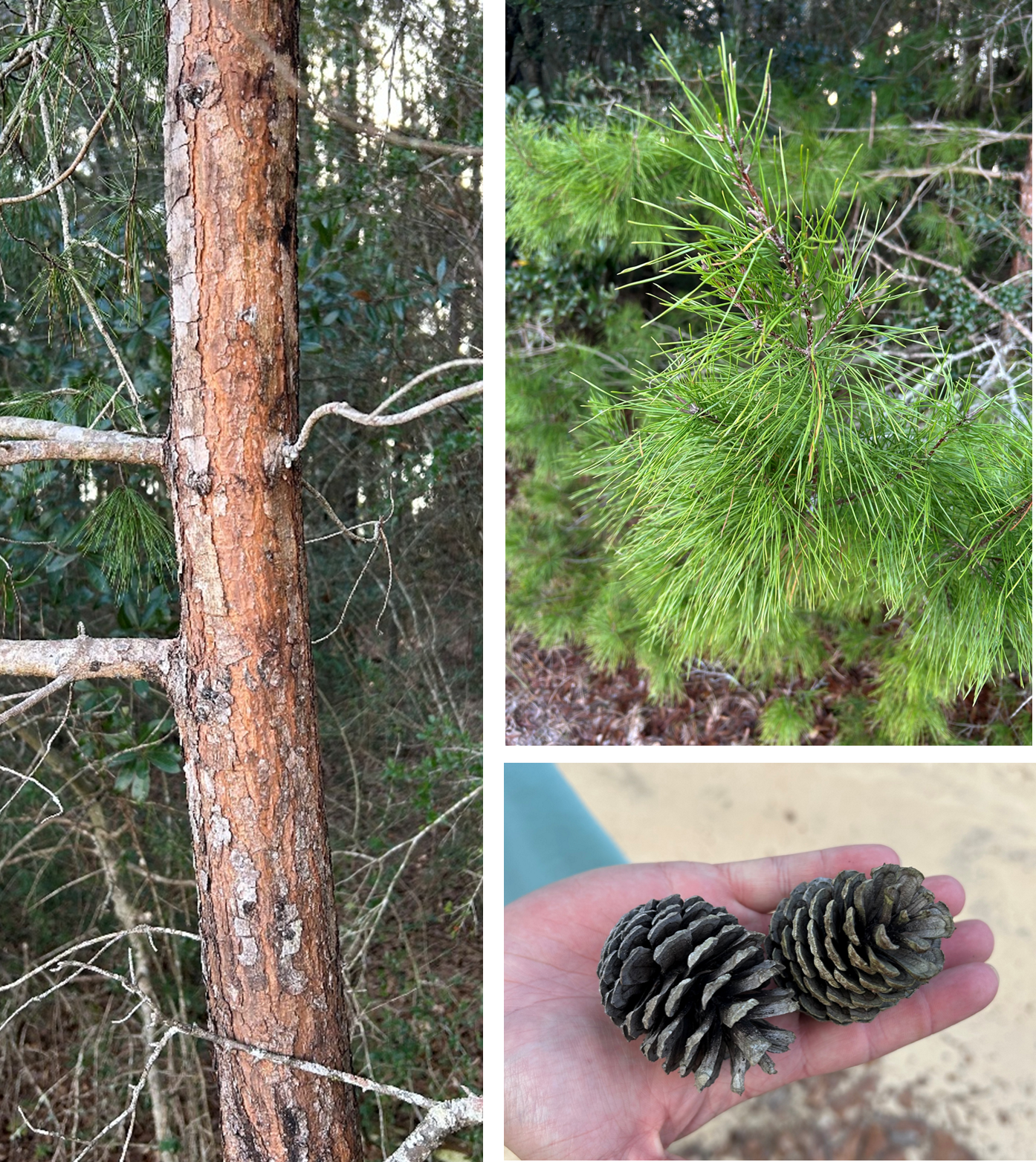
Sand pine is also known as scrub pine and is native to Florida and southern Alabama. There are two main varieties of sand pine: the Ocala variety in central Florida (Big Scrub) and the Choctawhatchee variety in the Florida panhandle and Alabama coast. Sand pine is known for its crooked trunks, tolerance to drought, and importance to wildlife. The wood of sand pine is limited to commercial value due to this crooked trunk, but it is sometimes used as pulpwood or fuel. The Choctawhatchee variety does tend to have a less crooked trunk and is sometimes grown for Christmas trees in their range. The Ocala variety mainly resides in central Florida in the Ocala National Forest with the largest stand of sand pine encompassing 250,000 acres homing 20 threatened or endangered species like the Florida scrub jay. Sand pine is not fire tolerant and has extensive fibrous roots that help to stabilize soils and prevent erosion.
Identification
• Needles: 2-3.5 inches long, dark green, flexible, bundles of 2
• Bark: thin and reddish-brown to gray-brown, smooth on young trees and develops scaly patches as it matures
• Cones: small, ovoid to conical, 1-3 inches long with hard scales
• Height: typically grows 20-40 feet tall, but can reach 60-80 feet tall
You can see Sand Pine growing up on the trails in Crestview.
Events in Destin-Fort Walton Beach
It’s always the best time of the year to visit Destin-Fort Walton Beach, Florida. Mild temperatures and warm gulf waters make the area enjoyable no matter the season. And with a running lineup of exciting local events and festivals, there’s always something to do in Destin-Fort Walton Beach!

October 10, 2026 - October 11, 2026
Repticon
Repticon is a premier traveling reptile and exotic animal expo,…
See details
October 10, 2026 - October 11, 2026
27th Annual Emerald Coast Home and Boat Show
Welcome to the 27th Annual Emerald Coast Home and Boat…
See details