What’s Blooming in October
Coastalplain Honeycombhead (Balduina angustifolia)
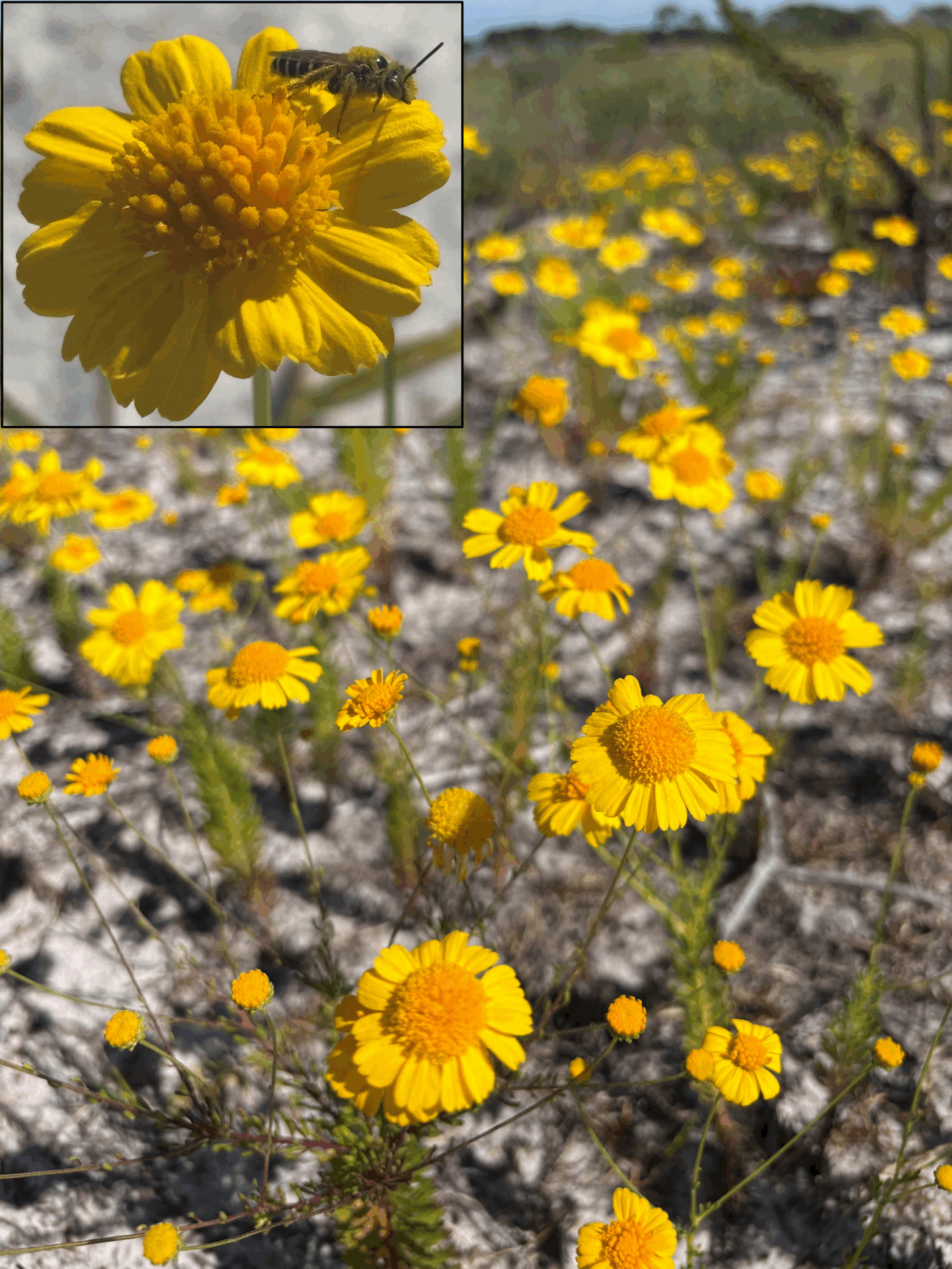
Also known as yellow buttons, this annual to biennial wildflower consists of many yellow ray and disk florets. This flower will produce 20 or more flowerheads on each plant. As the plant matures and reaches a post-anthesis stage (pollen is no longer in production) this flower resembles a honeycomb which led to its common name. Coastalplain honeycombhead can grow up to 3 feet tall in dunes, sandhills, and scrubby flatwoods. This wildflower has a mutualistic relationship with the Gulf Coast Solitary Bee and is seen blooming summer into fall.
You can see Coastalplain Honeycombhead blooming in the dunes on the beach or on the spoil islands. You can see Coastalplain Honeycombhead blooming in the dunes on the beach or on the spoil islands.
Purple Muhly Grass (Muhlenbergia capillaris)

Muhly grass is a perennial, clump-forming grass that can be seen blooming August to October. Muhly grass has small pink to purplish-red flowers with long thin leaves that can reach a height of 2 feet or more. This grass occurs naturally in coastal grasslands, hammocks, sandhills, pine flatwoods, and beach dunes. Muhly grass grows in large clumps that provide cover for wildlife and is an excellent plant to use in landscaping or gardening due to its hardy, drought tolerant behavior.
You can see Purple Muhly Grass blooming on the side of the road or up on the trails in Crestview.
October Flower (Polygonum polygamum)

October flower is a subshrub that can be seen blooming in late summer and fall, particularly October. This flower is found in sandhill and scrubby flatwoods through much of Florida and can grow up to 5 feet tall. October flowers have five white to pinkish petals with simple, grayish-green leaves that attract native bees with their showy white blooms. This flower is dioecious, meaning it has male and female parts that are born on separate flowers.
You can see October flower blooming in the dunes or on the spoil islands in Okaloosa County.
Blue Mistflower (Conoclinium coelestinum)
 Also known as Blue Boneset, can grow up to 3 feet tall and prefers moist soil. Blue mistflowers are found in swamps, moist meadows, and roadside ditches. When many flowers are in bloom together the flowers give the appearance of blue fog, hence the name. This flower is seen blooming July through November and is a magnet for late season butterflies and long-tongued bees.
You can see Blue Mistflower blooming on the side of the road in neighborhoods or on the trails in Crestview.
Events in Destin-Fort Walton Beach
It’s always the best time of the year to visit Destin-Fort Walton Beach, Florida. Mild temperatures and warm gulf waters make the area enjoyable no matter the season. And with a running lineup of exciting local events and festivals, there’s always something to do in Destin-Fort Walton Beach!

October 10, 2026 - October 11, 2026
Repticon
Repticon is a premier traveling reptile and exotic animal expo,…
See details
October 10, 2026 - October 11, 2026
27th Annual Emerald Coast Home and Boat Show
Welcome to the 27th Annual Emerald Coast Home and Boat…
See details