
What’s Blooming in September
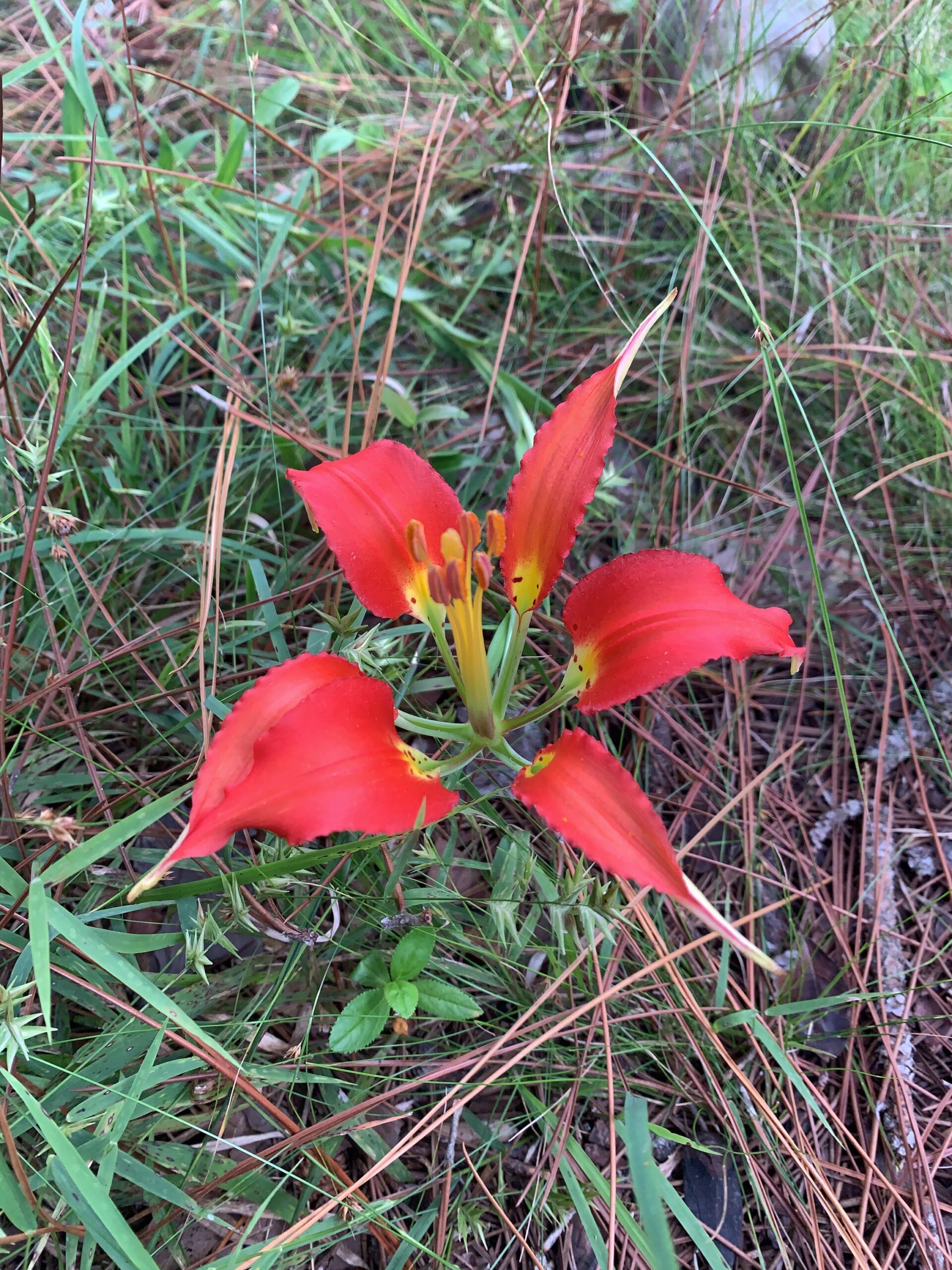
Pine Lily (Lilium catesbaei)
Also known as Catesby’s lily or tiger lily, this state-threatened species in Florida is a native perennial that can grow up to 3 feet tall. It blooms from June through October in wet pinelands, savannas, and bogs. The pine lily prefers acidic soil and can tolerate winter flooding. While its vibrant colors attract many pollinators, it is primarily pollinated by swallowtail butterflies.
This striking red and yellow lily depends on a healthy, fire-maintained ecosystem to thrive. Prescribed burns not only reduce the risk of wildfires but also enrich the soil with nutrients, supporting a healthy and diverse ecosystem.
You can spot pine lilies blooming along some of the trails in Crestview.
Sandhill Milkweed(Asclepias humistrata)
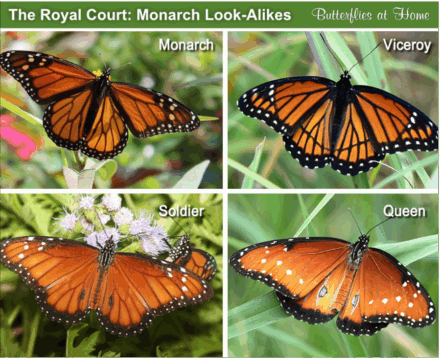
Also known as pinewoods milkweed, this perennial wildflower blooms in the fall. Native to Florida’s panhandle, it can grow up to 3 feet tall in well-drained, sandy soil. The plant produces a milky latex that is toxic to most animals; however, monarch, queen, and soldier butterflies have adapted to feed on it despite its chemical defenses.
Sandhill milkweed plays a critical role in the monarch butterfly’s lifecycle. Monarchs travel thousands of miles each year, relying on this plant for both pollination and as a food source for their young, which feed on its leaves.
You can see Sandhill Milkweed blooming in the dunes on the beach or on some of the spoil islands.
Creeping Cucumber (Melothria pendula)
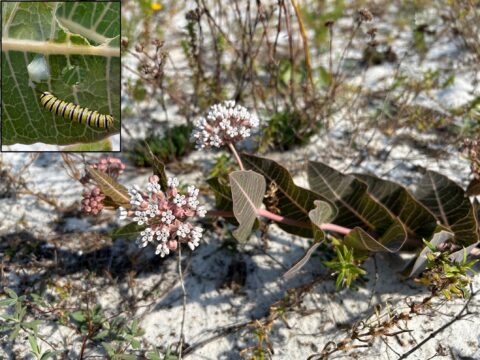
Also known as mouse melon, this native vine blooms from summer to fall in warmer climates. It produces bright, five-petaled flowers that develop into green fruits once pollinated. These light green fruits resemble tiny watermelons. When young and light green, the fruit is edible and tastes similar to cucumber; however, when fully ripened and turning dark green or black, it becomes unsafe to eat.
You can see Creeping Cucumber blooming just about anywhere in Okaloosa County. This vine can grow on bushes or trees.
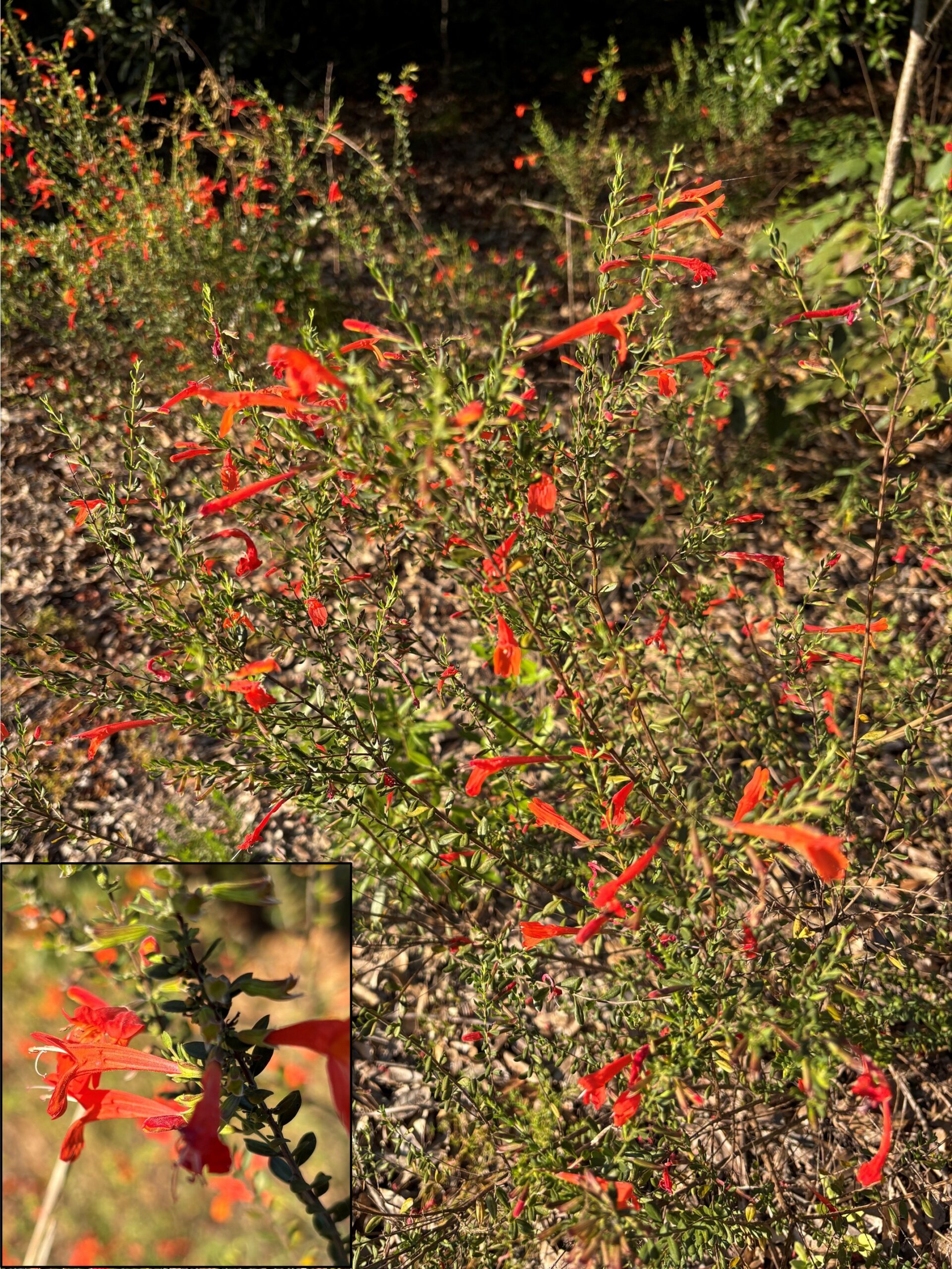
Scarlet Calamint (Calamintha coccinea)
Also known as red basil or red mint shrub, this is the only native Calamintha species with red flowers found in Florida. The name scarlet calamint comes from the minty fragrance released when its leaves are crushed. This wildflower blooms in early spring and late fall in scrub, sandhill, and coastal habitats. Its nectar-rich flowers attract a variety of pollinators, with hummingbirds and large butterflies especially relying on them as a key food source.
You can see Scarlet Calamint blooming on the trails in Crestview.
Events in Destin-Fort Walton Beach
It’s always the best time of the year to visit Destin-Fort Walton Beach, Florida. Mild temperatures and warm gulf waters make the area enjoyable no matter the season. And with a running lineup of exciting local events and festivals, there’s always something to do in Destin-Fort Walton Beach!

October 10, 2026 - October 11, 2026
Repticon
Repticon is a premier traveling reptile and exotic animal expo,…
See details
October 10, 2026 - October 11, 2026
27th Annual Emerald Coast Home and Boat Show
Welcome to the 27th Annual Emerald Coast Home and Boat…
See details